
Big Power Summit: Who Loses?
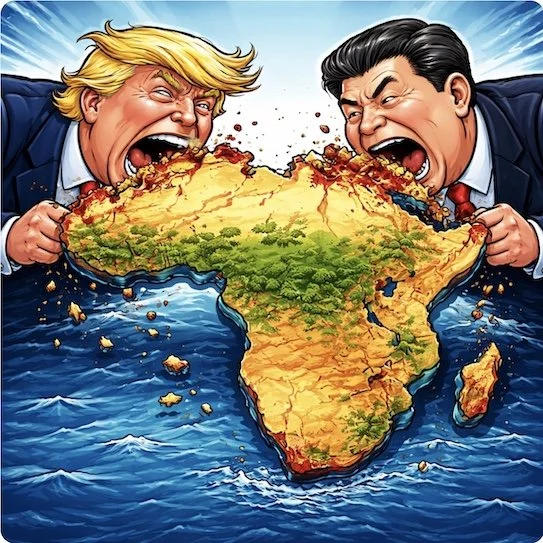
A.I. Cartoon
I’VE NEVER BEEN VERY SURE WHERE EXACTLY in Africa one of my favorite supposed folk-sayings originated … or whether it’s actually authentically African at all … but I do want to take it as my theme this week. It goes: “when elephants fight, it is the grass that suffers.”
Two massive creatures - for the sake of the analogy let them be really big countries, the US and China - have now met on China’s home-ground, with Donald Trump visiting Beijing for a session of what we had to hope would be merely verbal jousting with Xi JinPing.
Beyond all the airy hype, especially from the American side, about pushing through new deals for mutual trade and investment, the bedrock of deadlocked big-power rivalry remains immovable. Media headlines referencing “flashpoints” and “danger” and “high-stakes” were building up steadily as the meeting approached. On the very eve of the summit one of the Defense Department - sorry, War Department’s – undersecretaries found it necessary to remind us all that “China’s engaged in the biggest military buildup in world history over the last 15 years.”
No mention there, of course, of the Department’s own plea to the US Congress for a historically unprecedented American military budget of $1.5 trillion.
Observational rather than hyperbolic comment came from the often-quoted policy think-tank, the Peterson Institute, notably its China specialist, Martin Chorzempa who said, “We see a lot of pressure brewing.”
And sure enough (according to the state news agency, Xinhua) President Xi struck a warning, even perhaps threatening note when, cutting through all the pageantry and diplomatic razzamatazz, he said sharply about the Taiwan issue that divides the two powers: “If handled poorly, our two countries will collide or even clash, putting the entire U.S.-China relationship in an extremely dangerous situation.”
I have my own viewpoint. An important piece of background, a piece that’s certainly important for those of us who keep an eye on the continent of Africa, is that over the past few decades China has made extraordinary inroads into many African countries – largely using economic levers, but with an accompanying military presence in certain parts, that are increasing in number. For instance, the Chinese have built a full-fledged military base near the Horn of Africa, in Djbouti (below, right). An armed force of 4,000 or more People’s Liberation Army troops are stationed in barracks there, with live-fire naval exercises being frequently conducted in the nearby and strategically important Gulf of Aden and the Red Sea, both vital approaches to the Suez Canal.
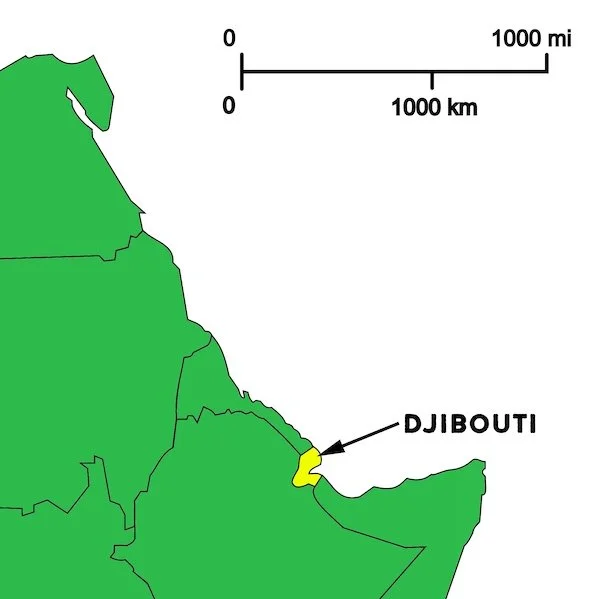
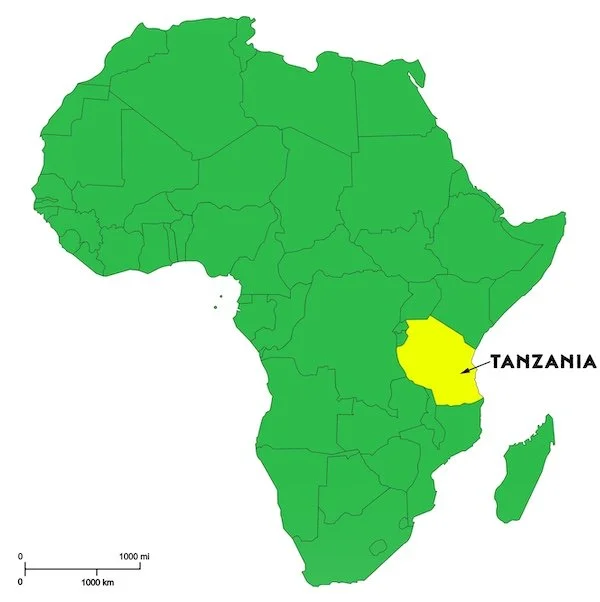
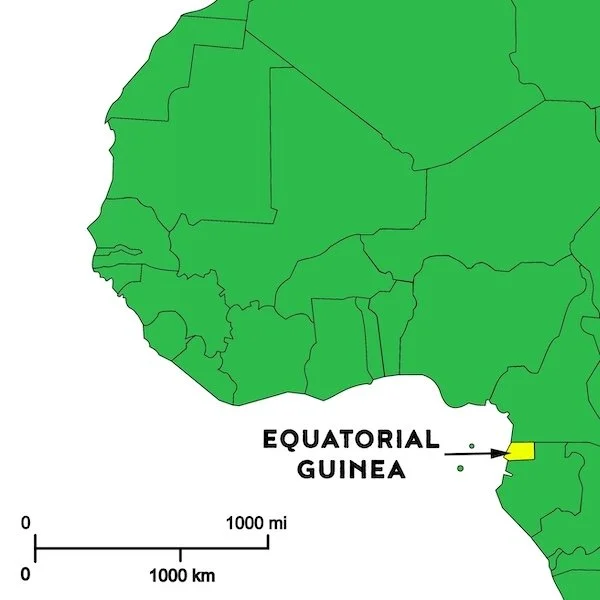
The base also hosts an extensive, ongoing program of training for Djibouti’s and other African military forces. Elsewhere in the continent … there is notably Tanzania to the south (further down, right), where Chinese connections run very deep historically, where 90 percent of its armed force’s weapons come from China, and China has built and maintains the key installations … of an air base, a naval base, and a military Training center. Then, all the way across the continent, there is Equatorial Guinea, (below, left) where cooperation goes back in time just as far. China is that small country’s largest trade partner and has financed at least 19 development projects there – including the creation of. a national TV network.
Detailed discussions are now ongoing between the militaries of both nations – evidently aimed at achieving a Chinese naval foothold on Africa’s west coast to match the Djibouti base in the east. China has already provided Guinea’s second city of Bata with a deep-water civilian, but potentially dual-use port. It’s part of a process to create what’s been colorfully called “A string of pearls in the Atlantic Ocean” -- that’s the phrase chosen by the usually very prosaic Center for Strategic and International Studies based in Washington. The Center has in mind a growing tactical linkage between the Bata port … a nearby oil depot and future refueling station … the country’s other main port in the capital, Malabo, and also the strategic island of Bioko, a hundred-twenty miles offshore.
THIS AFRICA-TARGETED AND MILITARILY-SKEWED DRIVE is all part of an overall international policy adopted by President Xi, and even publicly announced as such at the beginning of this decade. He named it then as his Global Strategic Initiative (GSI in its English-speaking abbreviation). The occasion was what is sometimes called the “Asian Davos,” a regional conference held annually in the Southern China city of Boao and called the Boao Forum for Asia. The only so-to-speak Western country represented there was Australia. The GSI, with its own clear military slant, is closely coordinated with the much broader and longer-established sweep of China’s so-called Belt-and-Road policy.
I’ve written many times about staying in African capitals and noting the Belt-and-Road policy’s very palpable effect on the whole continent. Most memorable perhaps (maybe because I’m a television journalist at heart) was the skyline of Windhoek, the capital of Namibia, utterly dominated by huge cranes, all emblazoned with Chinese characters spelling out construction company names.
But I’d like to single out another country, 15-hundred-miles to the north - not Namibia but Zambia, where I’ve had an attachment ever since the 1970s, when China was then practicing a very early version of its influence-gaining offensive – building for the Zambians a vital railroad line all the way from their land-locked country to Tanzania, with its ports on Africa’s long eastern coastline.
The test-case of Zambia, right now, is highly illuminating – especially in the crucial area of the nation’s healthcare.
WHILE CHINA MIGHT LOOK LIKE it’s throwing its considerable weight around in Africa, the truth is that the US has been no slouch, either.
In the wake of the Trump Administration’s broad cuts in foreign aid last year, the State Department has been pushing overseas countries to sign new agreements. Especially for aid, much reduced aid (it has to be said) in that vital field of health provision. The important thing to say here is that it’s aid to be provided only in return for those countries agreeing to meet certain, rather demanding conditions. (It’s become a truism about the current Administration that it is highly transactional, of course.) Twenty-four countries have agreed to those conditions – but not Zambia (bottom right map). The Zambians walked away from the negotiating table on the grounds that their sovereignty as a nation was being eroded.
China’s previous, longtime wooing of Zambia, has resulted in China having considerable access to Zambia’s vastly rich reserves of copper (which has always been an essential commodity) and of those increasingly valuable minerals, lithium and cobalt. And now America wants to muscle in. A memo leaked to the New York Times’s global health reporter Stephanie Nolen revealed that the US State Department was signalling two threats, as requirements before Zambia would get support for its national healthcare — both of which requirements, the Zambians have found unacceptable. First - the US wants, in the health field, unfettered ability to use Zambia’s medical data and biological research findings, but there is also a second condition, in the economic field: that American businesses must be given more access to Zambia’s mineral deposits – and by implication that China’s access would in turn be restricted.
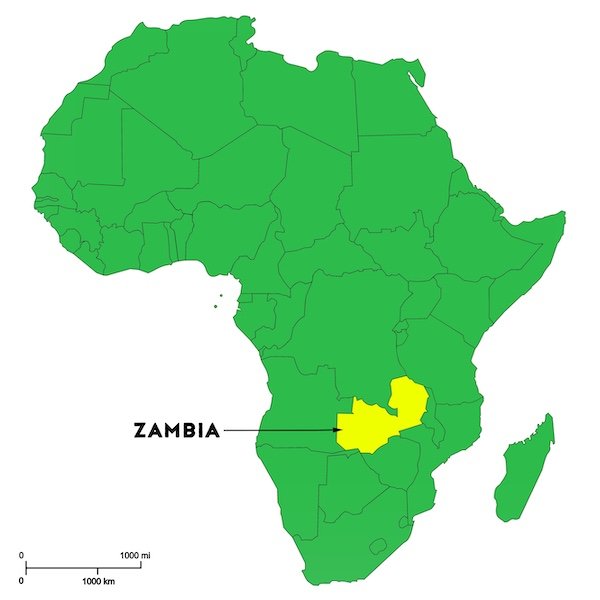
What is especially at stake here is PEPFAR – it’s an odd acronym, perhaps, but now very familiar throughout Africa, since the time of George W Bush. He initiated the groundbreaking provision - the President’s Emergency Plan for AIDS Relief (hence PEPFAR) and it’s been estimated that 1.3 million people, in Zambia alone, are being kept alive by the anti-retroviral and other medications which the program provides for HIV/AIDS patients. The leaked State Department document said that the US could “significantly cut assistance” if Zambia did not agree to the American terms by the beginning of May. Well, we’ve blown through that deadline -- and for now at least on both sides “radio silence” is being maintained in response to any press inquiries. Unofficially, administration staff have simply repeated the warning that this could mean Washington completely halts its H.I.V. aid to Zambia.
Meanwhile, far removed from the level of the hospital bed or individual humans swallowing their daily, life-saving pills, the globe’s two biggest beasts are meeting amid such deep tension that commentators are almost universally saying we should not expect any kind of real negotiating breakthrough. I noticed that The Economist magazine this week, in its typical, rather weirdly superior tone said: “Had they more skill and humility, Mr Trump and Mr Xi could head off the most harmful conflicts and find areas where they could work together for everyone’s benefit.”
What’s indisputable is that so far, everyone’s benefit does not include the people of Zambia. True to the old adage, the grass goes on suffering when the elephants clash.