
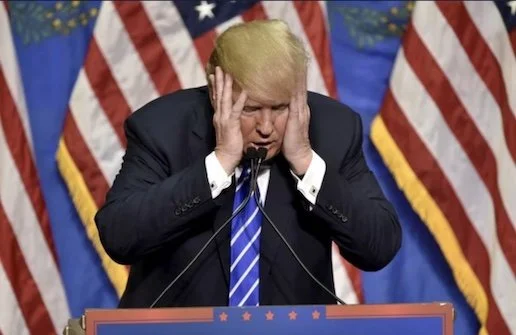
“IT’S ALL OVER BAR THE SHOUTING.” That’s a curious old phrase, with its origins in nineteenth century sportswriting. In the case of 2026’s mid-term elections, there’s still a lot more than just shouting that’s bound to go on, before we can truly know how the rest of our current President’s second term will proceed.
That president went on record just ahead of his remarkable trouncing, to muse out loud that “I guess I’ll become Mr. Veto" -- which suggested he was almost planning to lose both chambers of Congress, and would have to face unwelcome legislation passed by them, to be tackled by wielding his veto pen - or Sharpie more likely. And he claimed to foresee himself eventually coming to practice some old-style, traditional horse-trading, as if he was (how shall I say it) a normal politician. Only 48 hours before the fateful election-day, he was saying:
“At some point, we’ll probably make deals. This wouldn’t be the first time you’ll have a president, [who] won’t have the House or the Senate.”
And if anything he sounded more crestfallen, as the dimensions of his monumental rebuke by the nation’s electorate were becoming clear late on Tuesday night. He gave The New York Times an interview on the phone, saying that, “We’ll, you know, look forward to working with” the Democrats, and “we’ll probably work something out.” It couldn’t help sounding to this listener like yet another Trump lie – a different kind of lie (sort of admitting defeat), but still not anything to be really believed.
The two Times reporters, Erica Green and Tyler Pager who conducted the (really rather short) interview, described the Chief Executive’s tone as “subdued.” And other journalists who spoke with the cabinet members who gathered around Trump that evening (and who were careful to leave early) described the room’s atmosphere as “dark” and “funereal.” I can’t help adding an extra line from The Times that must count as some of its more understated reporting:
“Other allies of Mr. Trump said privately that they were happy they were out of town.”
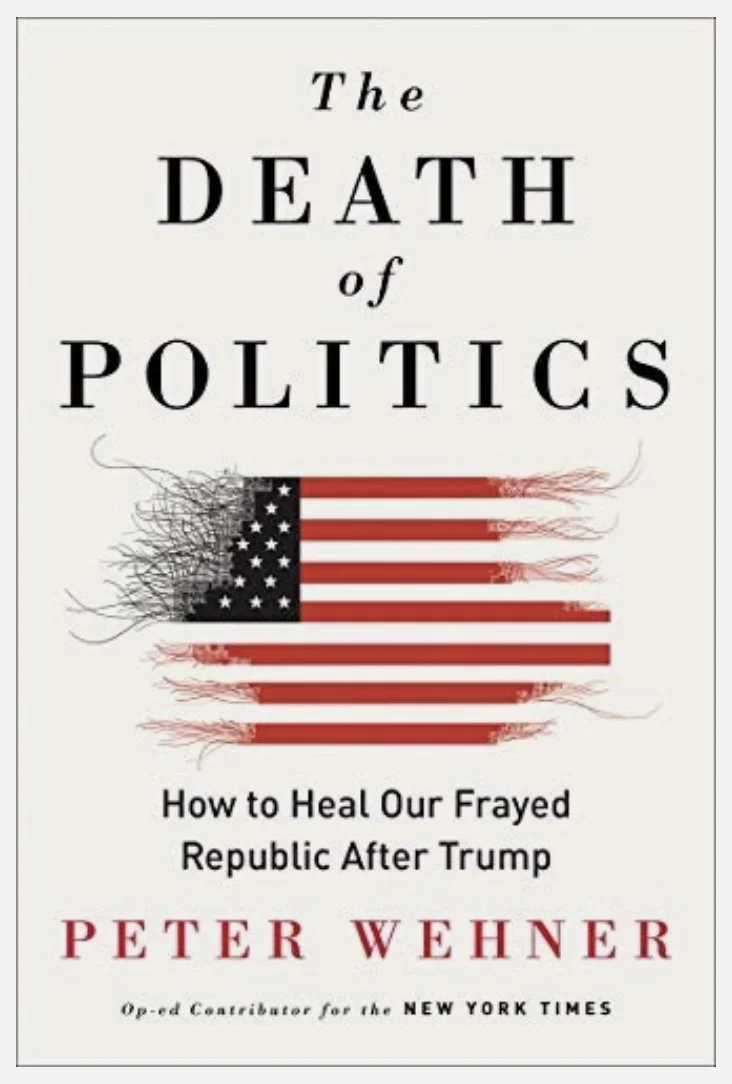
Well-attuned observers are certain that the next two years will see much less ‘working-things-out’ than Trump’s late-night blather was supposed to suggest. Peter Wehner, a veteran Republican operative who served three Republican presidents, Ronald Reagan and both Bushes, wrote a forceful book, The Death of Politics, with its telling subtitle How to Heal Our Frayed Republic After Trump. It was penetrating as well as prescriptive in its analysis. And elsewhere, writing in The Atlantic magazine, Wehner has now given us (with reference to the mid-terms’ complete routing of Republicans) his confident but troubling prophecy that:
“Trump will still be president, and his closing act will likely involve trying to tear the country apart.”
The new majorities in both House and Senate will naturally have to stay on guard against all kinds of Trumpian shenanigans. We had confirmed for us, during the campaign, that Trump is already preparing to preemptively pardon any of his aides who might get targeted by Congressional investigators. With reference to handing out such pardons, he told a rightwing podcast: “I would if I needed to, sure. I wouldn’t even think about.”
With street protests possibly breaking out, to take sides between the competing Chief Executive versus the Legislative Branch, echoes of the January 6 Capitol riot could well inevitably and resonantly surface. His hardcore supporters may have been reduced to an angry rump – but they can still (very obviously) make violent trouble. And that’s even before we consider the possibility of impeachment for their hero himself.
Perhaps the wisest course for the new Congress might be the Twenty-Fifth Amendment – allowing for the removal of a president who’s unfit to serve. His failing mental capacity is getting more and more obvious. And it cannot have escaped anyone’s attention that Vice-President JD Vance is already separating himself from Trump, over the Iran war. Trump has cannily agreed with him that the electorate doesn’t like that war. But watch out for some further distancing between the two men.
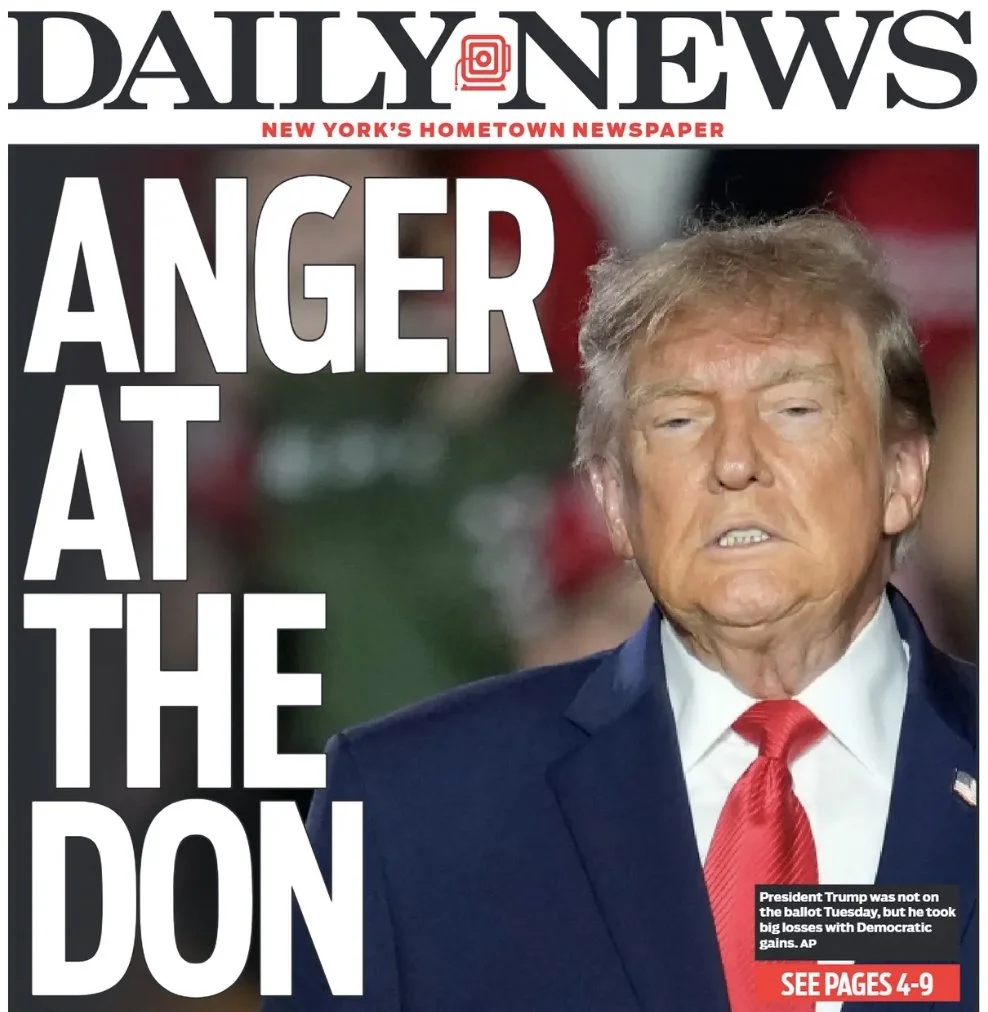
THE OVERALL PUBLIC MOOD FOR THE NEXT TWO YEARS, as proclaimed by November Third’s resounding result, contains one important element that deserves more attention than much breathless reporting about the president’s shellacking has given it. It is now very clear – perhaps as a sharp irony, or is it simply poetic justice – that immigrants – America’s newest voters – now have and will continue to have a crucial, even decisive say in the country’s direction. I mean especially our Latino and Asian populations.
Those communities’ significant swings that happened toward Trump two years ago, and which became swings away from him this week, are not distributed evenly across the country. Instead, they’re concentrated in states and districts that all share a striking demographic similarity: they are home to large shares of Asian or Latino voters. Their reaction as voters is hardly surprising in view of Trump’s ordering-out of ICE enforcement officers to menace such minority communities, in the process of course causing wholly unjustifiable deaths. Media reports have more often highlighted the impact on Hispanic populations, but there have also been, nationally since the ICE onslaught started, many thousands of Asians arrested by ICE -- nearly 19,000 detentions, and 10,000 deportations.
And of course it was more than an unruly armed force on the streets and in workplaces that fanned these voters’ anger. Latinos have been disproportionately affected by the spike in gas prices, since they tend to spend more than the national average on cars, trucks and fuel. And as inflation has increasingly embraced housing costs, that has affected Asian-Americans most, since they spend more on housing than the average American. No wonder these groups turned so extra-forcefully against Trump.
The punchy news-and-commentary site Argument, which often takes a long view, has carried a repeating series of large-sample polls throughout the past two years. And they’ve shown how much the Democrats’ margin over Republicans has steadily been rising; among Hispanics it has grown overall by 17 percentage points and among Asians by 14%. These are considerably bigger shifts than among both white and Black voters.
Statewide elections ever since Trump’s inauguration show the exact same trend, culminating in this week’s dramatically increased minority turn-out. Most striking perhaps? The great, previously deep-red Republican state of Texas, now a minority-majority state …. which elected Democrats as both a US Senator and as Governor, indeed a female, Hispanic Democratic governor.
Overall, though, the nation’s Democratic coalition, with all its different, often identity-based groupings, is also made up simply of people – the American people in all their great variety.
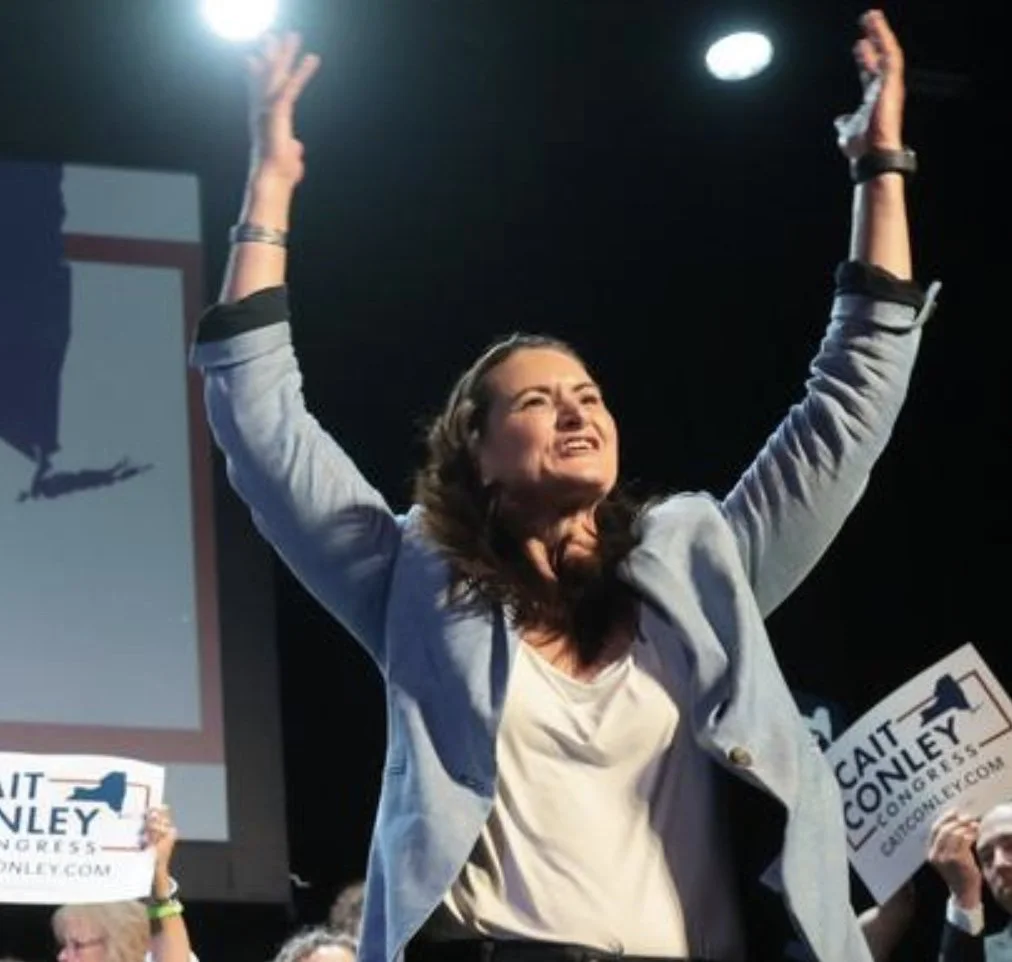
The Democrats’ Cait Conley (right), the army veteran and national security adviser who overwhelmingly won from the Republicans a Hudson Valley congressional district in New York, explained carefully in her victory speech that:
“We knew that America, the country of hope and opportunity, was on the wrong path. And tonight we have shown that this wasn't a partisan fight. This was a patriotic fight."
You might say … well, she’s a Democrat, she would say that wouldn’t she? So let’s turn to an evidently more objective source – a journalistic one.
Of all media outlets it was the staid, London businessman’s favorite newspaper, the Financial Times, that chose these populist-sounding words, for its headline to sum up the week’s huge turnabout:
“Donald Trump’s imperial presidency faced a popular uprising.”