
A Lesson on Beating Monsters
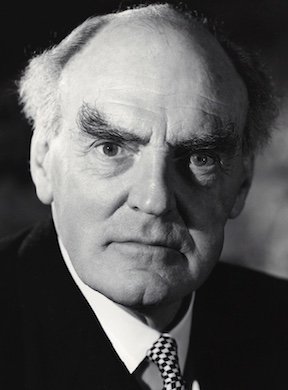
REITH (National Portrait Gallery)
MANY AMERICANS WILL NOT BE FAMILIAR with a deep-rooted media and public affairs tradition that emanates from the BBC in Britain.
It’s the big annual event known as the Reith Lectures, named after the BBC’s founding and very imposing Director General: Sir John, later Lord Reith (left). He stood six feet six inches tall, and he resoundingly mandated the BBC’s mission to be threefold: to inform, to educate and to entertain the public.
Starting in 1948 the annual lectures in his name, generally given by a globally-recognized expert, were to address a major issue of public concern, and in later times they’ve moved around the country a bit, being delivered to live audiences in different British locations, one per week for generally four weeks.
The series is broadcast on Radio Four, the BBC’s main domestic network, which predominantly carries the spoken word and long ago was named The Home Service. It’s also broadcast (some Americans might well know this) on the BBC’s World Service.
Historically it has been a highly-prized forum of important ideas. The distinguished speakers have included the philosopher Bertrand Russell, nuclear physicist Robert Oppenheimer, cosmologist Stephen Hawking and the Nobel Peace Prize laureate Aung San Suu Kyi of Myanmar (below right).
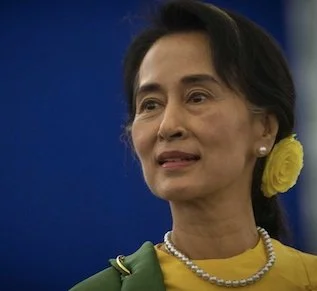
SUU KYI
We’re now in the second week of this year’s Reith Lectures. This year’s lecturer is the Dutch author of incisive and best-selling history books, Rutger Bregman (below left). His topic was inspired, he says, by the Italian philosopher Antonio Gramsci writing a century ago while imprisoned by the Fascist regime of the day; Granschi said the world was going through a “Time of Monsters” – and this became the title of Bregman’s first lecture, delivered in the BBC’s own iconic building in London, Broadcasting House.
All four lectures are calling for the overthrow of today’s versions of monstrosity, through the agency of what he boldly labels as nothing less than “A Moral Revolution,” which is how he has entitled the series as a whole.
Which monsters does he have in mind in today’s world that have to be overthrown? Well, just in case you can’t guess, but of course you can, he reeled them off by name during last week’s first lecture.
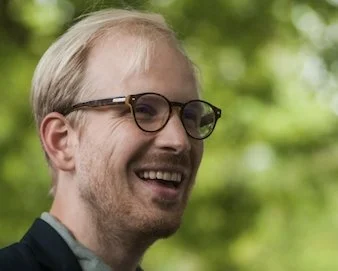
BREGMAN
His citations went like this … Donald Trump in the US, Nigel Farage in the UK, the leaders in Germany of AfD, Alternative für Deutschland … and Geert Wilders, leader of the equally far-right PVV party in Bregman’s own home-country of Holland. And there are of course a lot more that he could nave named … but you get the picture.
There are many ways you could generalize about what those and similar leaders have in common, but Bregman chose to put it this way,
They're against democracy and … they are betting on our apathy. They want us to plug out, to scroll, to binge, to put on our VR glasses and noise-canceling headphones while they take over the world.
Sounding like the stern moralist I imagine his father was – as a Protestant pastor – our lecturer pilloried the immorality of our leaders. He likened today’s America to the spectacular and lurid collapse of Rome, and European countries to the slow death of the onetime Venetian Empire. A lot of human misery, as he admitted, misery of historic proportions.
But Bregman also acknowledged a writing debt to his father, who regularly constructed his sermons upon – first, Misery – and then (wait for it) … Redemption.
MOVING TO THE GREAT PORT CITY OF LIVERPOOL, Bregman’s second lecture, delivered this week, is called How to Start a Moral Revolution. I urge you to listen or read it (or both) at the BBC’s website.
Liverpool is famous for many things, but what drew Bergman to the city was its substantial role in the transatlantic Slave Trade (along with the big west-of-England port, Bristol). He’s the author of a book on Great Moral Pioneers and has made a special study of Britain’s anti-slavery Abolitionists.
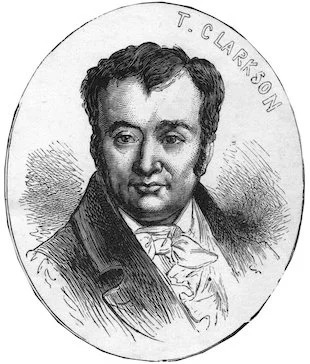
CLARKSON
In the lecture he goes back to 1787 to profile a founding member of the Society for Effecting the Abolition of the Slave Trade, Thomas Clarkson (right). Clarkson is not exactly an unsung hero, but he’s definitely less sung than the much more famous Williiam Wilberforce, who despite his greater reputation, came to the Society only later. The vast majority of the original founders were, Bregman is careful to point out, business people – entrepreneurs, in our modern phrasing. He contrasts these activists with their equivalent society in France which comprised mainly writers and philosophers. They managed to recruit only 141 members and folded after five years. Similarly, anti-slavery movements were a much lesser presence in other European countries, too.
In England Clarkson was the youngest Society founder and possibly the most energetic. He’s credited with traveling the length and breadth of the country - 35,000 miles in total, on horseback, very often at night. He set up hundreds of local committees who held campaigning meetings and recruited hundreds of thousands more supporters.
Clarkson even went into the belly of the beast, the port of Liverpool, where he was almost murdered by slave-traders who tried to throw him off a dock pier.
Eventually the groundswell of opinion he and his colleagues managed to generate led to the UK Parliament passing the Slavery Abolition Act of 1833 – and the Royal Navy enforcing it out at sea. Historians now credit those efforts with curtailing 80 percent of the international slave trade.
How did they do it? – Bregman quotes America’s legendary anthropologist Margaret Meade with this ostensibly simple explanation.
Never doubt that a small group of thoughtful, committed citizens can change the world. Indeed, it's the only thing that ever has.
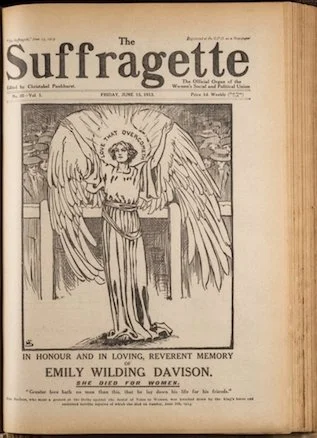
SUFFRAGETTE newspaper, 1913
Bregman has his own list of examples, some of whose work stemmed directly from the Abolitionists’ success. He begins, though, with a less than wholly virtuous group – Russia’s Bolshevik party under Vladimir Lenin in 1917, but then turns swiftly (and he says more “gloriously”) to … Florence Nightingale and the nurses who pioneered evidence-based medicine … Emmeline Pankhurst and the Suffragettes (left) who won the vote for women in Britain (and some of whom, we know for sure, emulated their anti-slavery predecessors) … and then (in the 1950’s and ‘60’s) the American agronomist Norman Borlaug and his fellow genetic inventors whose Green Revolution saved millions from famine.
What all these people had in common was a clear vision, a scalable strategy (which would, I’d say, be even more important in today’s world of mass, interactive communications) … plus the perhaps most telling ingredient for Bregman -- an unflagging persistence in pursuing their goals.
Thus has 2025’s Reith Lecturer begun his broad rallying cry for a modern Moral Revolution. And there are still two more lectures to go. Perhaps he’ll lay out realistic prospects for how such a revolution could actually in practice happen. And maybe even who, or what kind of people, its leaders could be.
THERE IS, THOUGH, AN APPALLINGLY IRONIC TWINGE – a decidedly downward turn to all this lofty messaging that I have to report on.
The BBC was aptly adhering to its strong history of independent editorial output by commissioning Bregman’s Reith Lectures – but even here the BBC’s current institutional troubles have contrived to sully its own work.
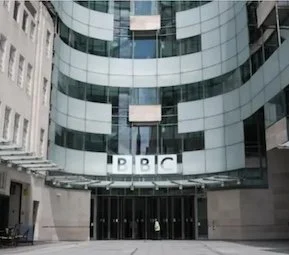
BBC HQ
I’m inevitably referring to last month’s resignation by Lord Reith’s present-day successor as Director General, along with the Corporation’s Head of News. The resignations came after a flurry of dispute and — I’m sad to say — confused and delayed decision-making – caused by the BBC’s Panorama documentary broadcast a year ago, which had involved some clumsy, ill-judged editing of Donald Trump’s rhetoric at the time of the Capitol Riot in 2021.
In the face of Trump’s threats in reaction to the Panorama program to sue the BBC for defamation, claiming the preposterous amount of a billion dollars in damages, senior staff decided to cut a section from Bregman’s first lecture. He had described Trump as “the most openly corrupt president in American history.” And those were the words edited out of his talk when it was broadcast. A BBC statement said “we made the decision to remove one sentence from the lecture on legal advice.”
Bregman took to social media to protest ( – he’s every bit that kind of historian). He said
“This happened against my wishes, and I'm deeply troubled by it. Not because people can’t disagree with my words, but because self-censorship driven by fear … should concern all of us. This sentence wasn’t a baseless accusation. It was a defensible and plausible statement.”
He went on to directly relate his complaint to the core message of the very broadcast that had been censored. “Democracies don’t collapse overnight,” he said. “They gradually erode in acts of fear. Let’s not be afraid to tell the truth.”
The current and very beleaguered chair of the BBC’s Governors is someone I once hired as a TV journalist – and I have great respect for him and his editorial values. I fervently hope that he … and his top executives … and perhaps more importantly anyone who’s now applying for the vacant position as next successor to Director General Reith … will pay very close attention to that message from the BBC’s own most recent, carefully-chosen public speaker.